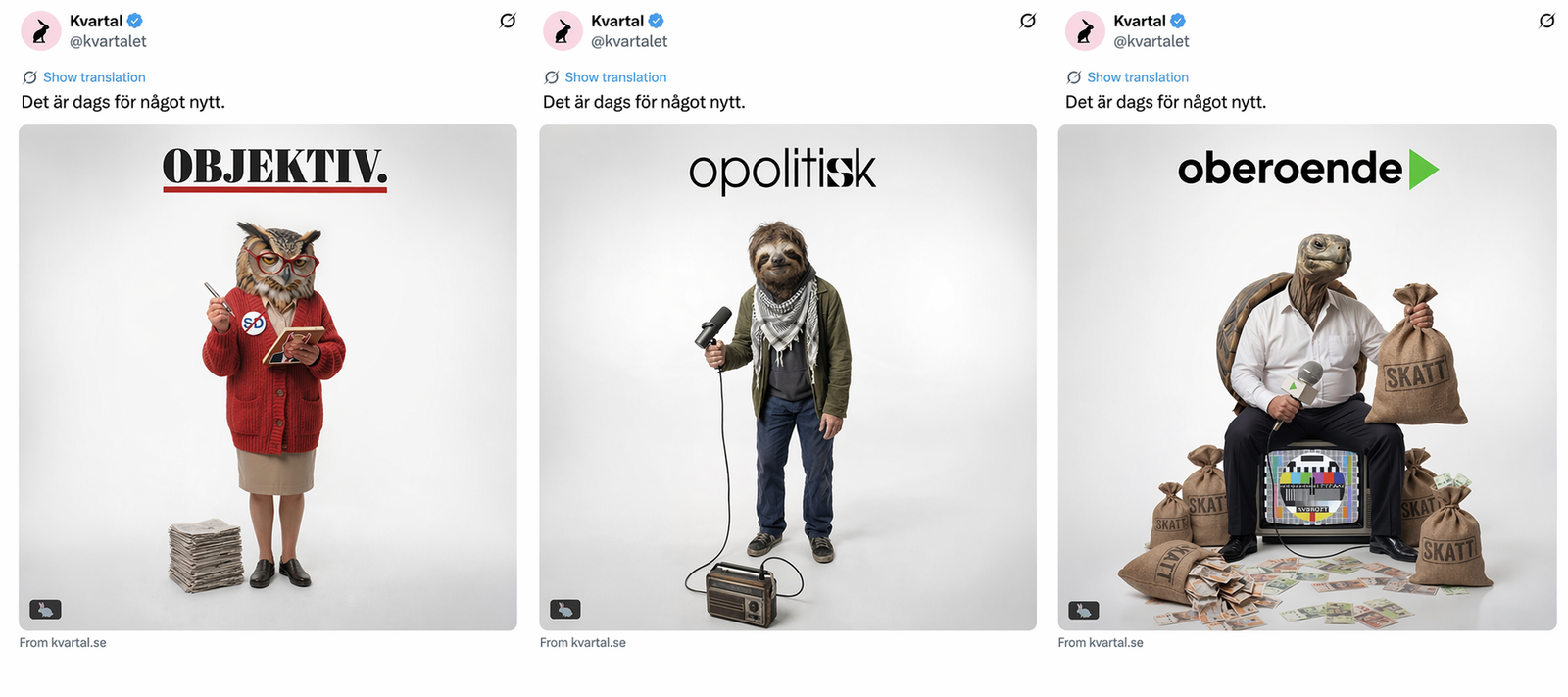
1
Rimligt?
https://www.expressen.se/nyheter/sverige/sparen-efter-mohamed-ali-skuldberg-och-brutna-loften/ Det vore väl på sin plats att låta samtliga partier ha en detaljdebatt om detta, är det rimligt i Sverige?
1
Flera bolag, bl.a Telia annonserar uppsägningar idag. Frågan är om AI-squezen har börjat på riktigt nu? Känns som ofantligt många jobb mellan golvet och ledningsgruppen nu är i farozonen. Inte helt lätt att navigera i denna arbetsmarknad...
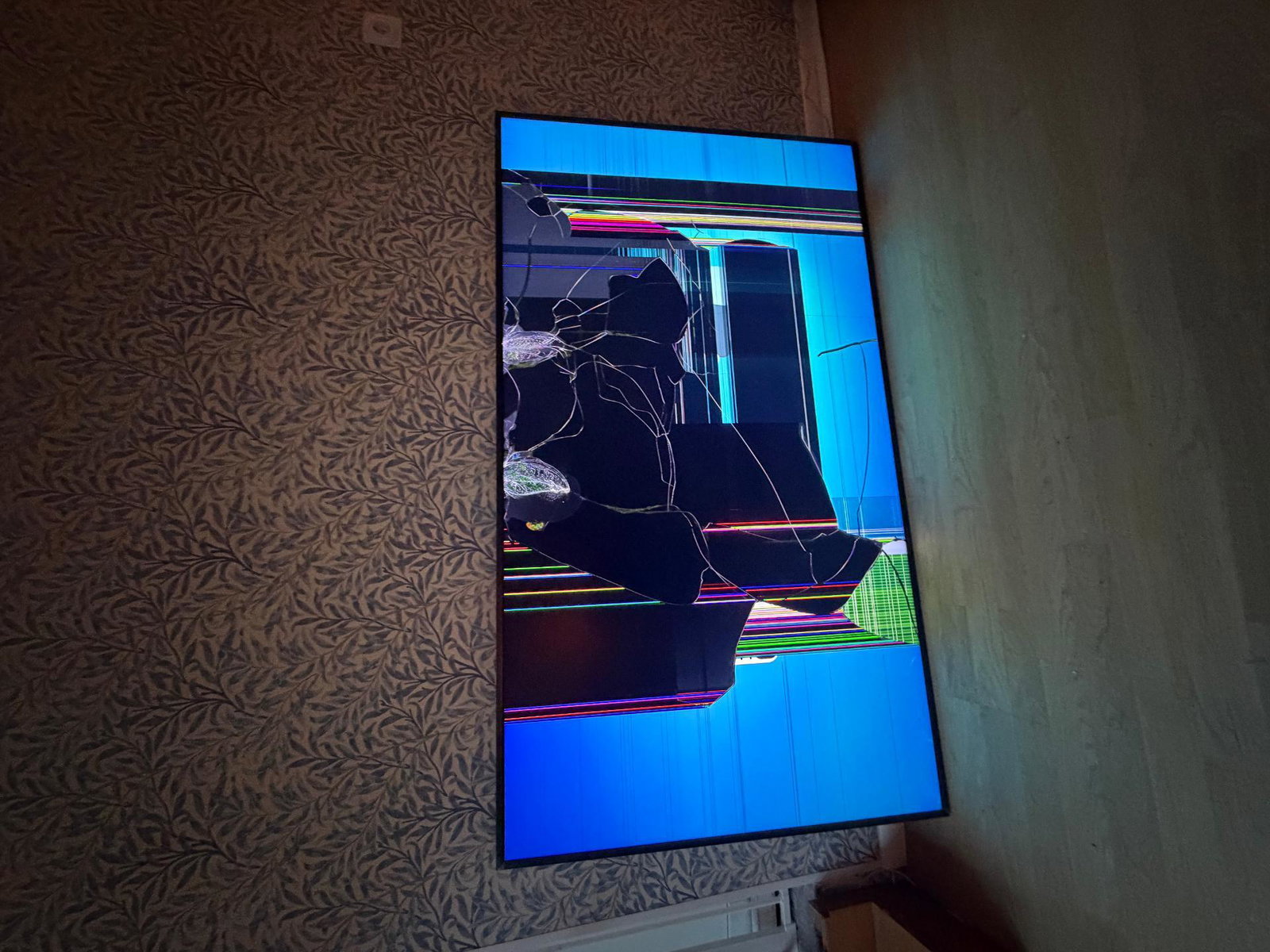
Ja, som bilden visar, totaltrashad TV. Levererad av PostNord, sen vi flyttade till Gbg är typ varenda grej som levereras trashad på det ena eller andra sättet. Nån som upplever det samma? Känns inte som att man är det minsta rädd om grejerna längre.
On 22 September 2026, Sweden’s privacy authority IMY fined municipal HR/work-environment vendor Miljödata SEK 1.8 million for weak security after an August 2025 breach that, per the company, hit about 2.2 million people — personal IDs, contacts, sickness/rehab data, even school incidents involving minors. IMY cites missing software install checks and no automated real-time intrusion monitoring (GDPR Art. 32.1). Most Swedish municipalities were among the customers; probes of two municipalities and one region are still open. Sources: IMY decision summary (https://www.imy.se/nyheter/sanktionsavgift-mot-miljodata-for-bristande-sakerhet/) · BleepingComputer write-up (https://www.bleepingcomputer.com/news/security/sweden-fines-milj-data-183-000-over-breach-affecting-22-million/). For software that sits inside most Swedish kommuner — is 1.8m SEK enough to change vendor security posture, or will real pressure only come when municipalities themselves get fined?
Sweden still talks like a climate leader. The official numbers say something blunter: under current policy, the country is not on track for its 2030 and 2040 national targets, nor for its EU Effort Sharing Regulation commitment for 2030. That is the core finding of the Swedish Climate Policy Council’s 2026 evaluation — and it matters more now that an election cycle is forcing every party to say how it would close the gap. What the Climate Policy Council actually concluded The Climate Policy Council (Klimatpolitiska rådet) evaluates whether government policy is consistent with Sweden’s climate framework. In its 2026 report it concludes that, with policies already decided, Sweden looks set to miss both the national milestones for 2030 and 2040 and the EU ESR-sector obligation for 2030. The council is explicit that the gap to those nearer-term targets has widened during the current term of office. The long-term picture is only slightly less bleak. The government’s own latest scenario puts the remaining gap to net-zero greenhouse gas emissions by 2045 at about 19.6 million tonnes — against a 2024 emissions level of roughly 47.5 million tonnes. In plain language: present conditions and policies get Sweden a bit more than halfway to net zero from today’s level. The council notes that the 2045 gap has narrowed a little during the term, but near-term emission increases still raise expected cumulative emissions through 2045. Full report (English PDF): https://www.klimatpolitiskaradet.se/wp-content/uploads/2026/06/swedishclimatepolicycouncil2026report.pdf SVT’s check on the government’s talking points Politicians have leaned on a different story: that emissions in 2026 will be lower than in 2022, and that emissions fall in three of the four years of the term. SVT’s climate desk tested those claims against the government’s own forecast (article published 6 April 2026). SVT’s calculation: cumulative emissions over the Tidö parties’ four years are expected at about 183.4 million tonnes of CO₂-equivalents. Had annual emissions simply stayed at the 2022 level for each of those years, the sum would have been about 180.7 million tonnes. So the “mandate period total” is higher than a flat 2022 baseline — even if the end-year figure ends up similar. On the end-year comparison itself, the government’s prognosis points to roughly 45.2 million tonnes in both 2022 and 2026. The claim that emissions “fall three of four years” can be true in a narrow sense and still mislead, SVT argues, because one year’s increase can cancel the three years of decline combined. The government’s own final budget climate account for the term also states that current policy does not look sufficient to hit Sweden’s climate goals — national or EU, short- or long-term. SVT article: https://www.svt.se/nyheter/inrikes/regeringens-pastaenden-ger-vilseledande-bild-av-utslappen International rankings tell a similar story Outside Sweden, the Climate Change Performance Index for 2026 ranks the country 13th — two places down — with a mixed profile: still high on greenhouse-gas emissions performance and very high on renewable energy, but low on climate policy and very low on energy use. CCPI country experts flag that some policies have been weakened or removed and that fossil fuel use has increased rather than fallen in parts of the picture. One cited example: in November 2024 the minority government declined permits for 13 Baltic offshore wind projects totaling about 32 GW of planned capacity (approving Poseidon), citing military security concerns. CCPI country page: https://ccpi.org/country/swe/ Why the next climate action plan is the real deadline Sweden’s Climate Act requires a climate policy action plan early in the next term of office. The Climate Policy Council stresses that this plan is meant to chart the path all the way to the 2030 targets — which leaves a narrow window. After a unanimous parliamentary inquiry in autumn 2025, all Riksdag parties support the long-term goals and a proposed new interim target for 2030. Shared goals do not automatically mean shared instruments. The council’s practical recommendation is blunt: each party should publish a plan for how the targets will be met, then turn that plan into early decisions after the election, leaning hard on already-investigated measures because there is little time left to invent new ones from scratch. Public pressure is visible too. France 24 reported that around 10,000 people rallied in Stockholm weeks before the general election, with organisers accusing the government of weakening emissions policy. A Verian poll published by SVT put climate among top election priorities for 37% of respondents. France 24 coverage: https://www.france24.com/en/europe/20260823-thousands-rally-in-sweden-to-protest-climate-policies-ahead-of-general-election What this means if you care about Swedish climate policy Strip away the slogans and three facts remain hard to spin away: 1. Independent council assessment: not on track for 2030/2040 national targets or EU ESR 2030; nearer-term gaps widened. 2. Government’s own numbers: ~45.2 Mt in both 2022 and 2026 in the prognosis SVT cites; ~19.6 Mt still missing to 2045 net zero in the council’s reading of the latest scenario. 3. External scorecard: CCPI 2026 rank 13, weak on climate policy despite strong renewables performance. That combination is unusual for a country that still sells itself as a green frontrunner. It does not prove Sweden cannot rebound — the council itself says the targets remain reachable if the next action plan is concrete and early. It does prove that waiting for another gentle year-to-year dip is not a strategy. Discussion If every Riksdag party now formally backs the climate goals, which single policy do you think should be non-negotiable in the next climate action plan — and which one would you scrap first?
Sweden still has no e-krona. What changed in 2026 is not a launch date, but a clearer policy signal: Sveriges Riksbank now wants Parliament and the Government to prepare the legal ground so a central bank digital currency (CBDC) could be introduced “within a reasonable time” if the Riksdag ever decides to allow it. That recommendation sits in the Riksbank’s Payments Report 2026 and is explicitly tied to the euro area’s digital euro work — not to a sudden domestic payment crisis. For anyone following Swedish banking, payments infrastructure, or CBDC debates, the practical question is no longer “is there a pilot?” but “what would have to happen before Sweden could issue one?” What the e-krona actually is (and is not) According to the Riksbank’s own e-krona overview, an e-krona would be a digital Swedish krona issued by the central bank — state money in digital form, meant as a complement to cash rather than a replacement for it. Today the public already holds kronor mainly as commercial bank deposits (private digital money) and, to a shrinking degree, as cash (state money). The Riksbank’s stated motives include keeping a public choice between state and private money as cash use declines, supporting a unified monetary system (a krona should be worth the same regardless of which bank holds it), strengthening payment-market resilience and offline capability, and potentially widening access for payment innovators that are not large banks. Importantly, none of that equals a decision to issue. The same Riksbank page is blunt: whether Sweden introduces an e-krona is ultimately a political decision for the Riksdag. Primary source: https://www.riksbank.se/en-gb/payments--cash/e-krona/ The technical chapter is largely closed — the legal one is not The Riksbank started formal e-krona analysis in 2017. A practical pilot to test a technical platform ran from about 2020 and was completed in 2023. The bank has published multiple pilot-phase reports (including phase 4 material dated 2024 on the project pages). Focus then shifted from building prototypes toward monitoring international CBDC work, especially the European Central Bank’s digital euro. In parallel, the government’s Payments Inquiry (Betalningsutredningen), presented in March 2023, judged that there was not sufficient societal need for the Riksbank to issue an e-krona at that time — while noting that global changes could reopen the assessment. So by late 2023 Sweden had: technical learning from a finished pilot, a cautious domestic inquiry, and no issuance mandate. That is the baseline the 2026 recommendations are reacting to. Primary sources: • https://www.riksbank.se/en-gb/payments--cash/e-krona/ • https://www.riksbank.se/en-gb/payments--cash/e-krona/technical-solution-for-the-e-krona-pilot/ • https://www.riksbank.se/en-gb/payments--cash/payments-in-sweden/payments-report-2026/developments-in-the-payments-market/new-forms-of-money-are-being-developed/ Payments Report 2026: prepare the law, wait for the digital euro trigger On 12 March 2026 the Riksbank published a specific policy recommendation: appoint an inquiry into the legislative amendments needed so an e-krona could be introduced reasonably quickly if the Riksdag later authorises issuance. The bank proposes that this inquiry be set up only after two euro-area milestones: finalised digital euro regulation, and an ECB decision to issue a digital euro. The inquiry could be started by the Government, or by Parliament instructing the Government. The competitiveness and preparedness arguments in that text are concrete. If a digital euro becomes a major European payment rail, infrastructure and regulation may organise around it. Sweden would then face a risk that the krona lags technologically, or that some Swedish payment flows migrate toward euro-denominated digital central bank money. The Riksbank also notes a possible design path: an e-krona that, by agreement with the ECB, uses the same platform as the digital euro — for cost, interoperability, and offline preparedness. Separately, in the same Payments Report chapter on new forms of money, the Riksbank summarises the ECB’s own timeline language: once a legal framework is in place, the ECB estimates a digital euro could be launched and issued in 2029 (citing ECB digital euro material retrieved 19 February 2026 in the Riksbank text). That is not a Swedish launch date; it is the external clock the Riksbank is watching. Primary sources: • https://www.riksbank.se/en-gb/payments--cash/payments-in-sweden/payments-report-2026/the-riksbanks-policy-recommendations/recommendation-for-riksdag-and-government-to-set-up-an-inquiry-on-an-e-krona/ • https://www.riksbank.se/en-gb/payments--cash/payments-in-sweden/payments-report-2026/developments-in-the-payments-market/new-forms-of-money-are-being-developed/ • https://www.ecb.europa.eu/euro/digital_euro/html/index.en.html What this means for Swedish banking and payments debates For banks, fintechs, and policymakers, the 2026 message is sequencing, not hype: 1. No e-krona is on the market today, and the Riksbank is not claiming issuance is decided. 2. Domestic need alone was judged insufficient in 2023; the new urgency is mainly external (digital euro + strategic autonomy in payments). 3. The next Swedish step the central bank wants is legal preparatory work timed to euro-area decisions — not a surprise go-live. 4. Design questions that matter later (holding limits, privacy/offline trade-offs, distribution via banks vs other intermediaries, competition effects) are still downstream of a Riksdag mandate. Stablecoins are also discussed in the same Payments Report chapter as a private alternative with limited consumer protection and no deposit guarantee — another reason central banks keep CBDCs on the agenda — but that is context, not a claim that Sweden’s retail payments suddenly depend on crypto rails. As of mid-2026, Sweden’s e-krona story is: pilot done (2023), political need still undecided, legal readiness now explicitly requested by the Riksbank once the digital euro regulation and ECB issuance decision are clear. Anyone searching “Swedish e-krona status 2026” or “Riksbank CBDC inquiry” should treat the Payments Report 2026 recommendation pages as the primary source of truth — not second-hand launch rumours. If the digital euro really does land around the ECB’s indicated 2029 window, will Sweden be ready with an e-krona mandate and law — or comfortable staying cash-plus-bank-deposits while the euro area runs a public digital currency?
OECD säger att Sverige bör fasa ut hyresregleringen och minska stöden till bostadsägare. Argumentet: långa köer, felmatchning, och att billiga hyresrätter i praktiken är omöjliga att få. Samtidigt står nybyggda lägenheter tomma för att få har råd med 15–20 000 kr i månaden för en trea. Äldre hyresrätter med bruksvärde har 20–40 års kötid. Unga vuxna bor ofrivilligt hemma i rekordhög grad — i Stockholm nästan var tredje — och många skjuter upp familjebildning på grund av boendet. Om regleringen fasas ut: får vi mer rörlighet och fler rimliga alternativ, eller bara högre hyror på det som redan finns medan byggkostnaderna fortfarande är för höga för svenska löner? Vad tror ni händer först i storstäderna — mer utbud till priser folk faktiskt kan betala, eller att den som redan står sist i kön får det ännu dyrare?
Dechefr, utvecklat av Lisa Kaati vid Stockholms universitet, flaggar varningssignaler i text: beundran för tidigare dåd, edits, planer. Amerikanska skolor och poliser använder det redan. Svenska myndigheter gör det inte. Kaati säger att den misstänkte i Fagersta uppfyller många av kategorierna — men spekulerar inte om det hade stoppat attacken. Ska Sverige använda Dechefr i skolor, eller är övervakning av elevers chattar för högt pris?
tv4.se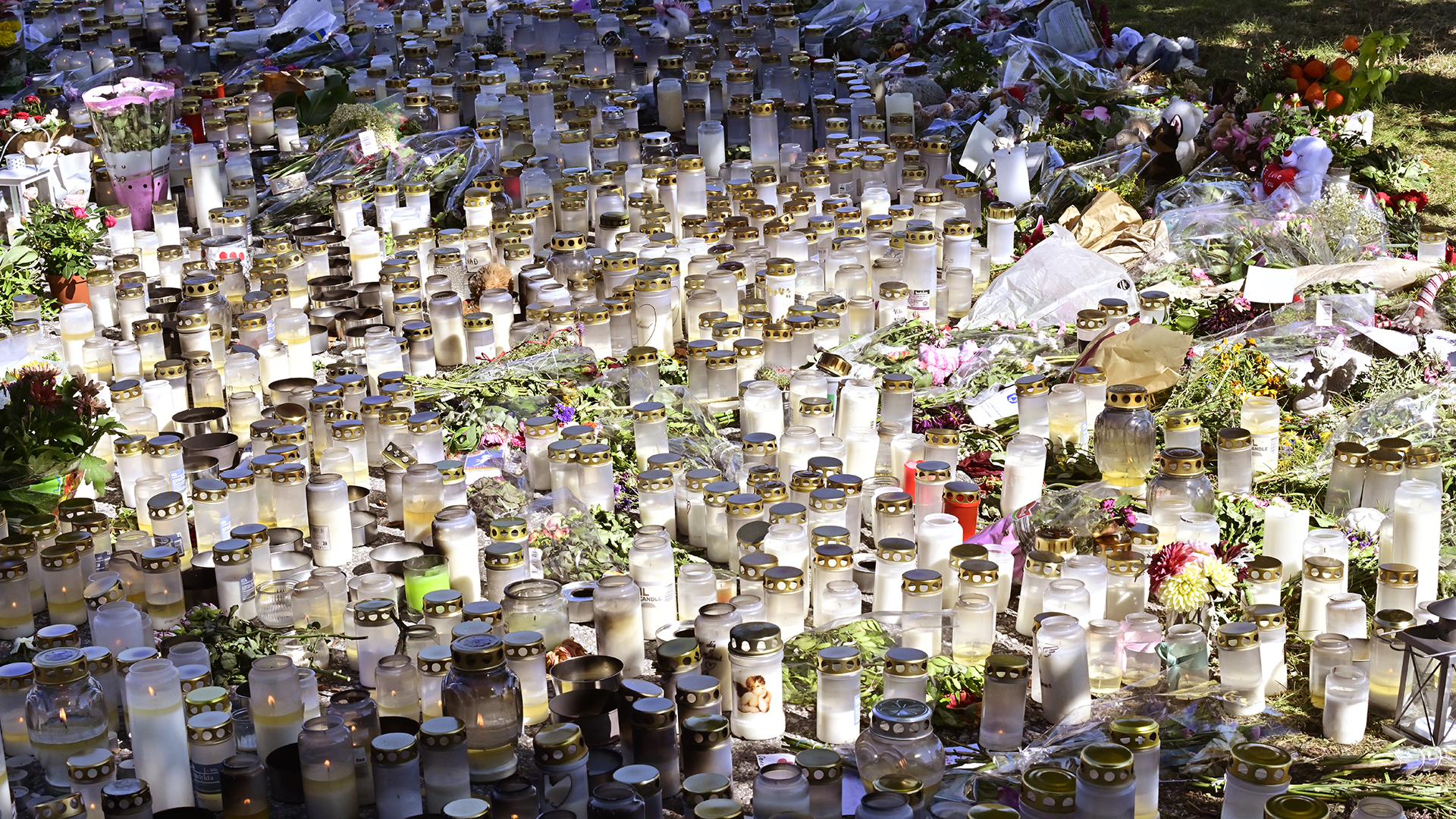
Three days after the vote, Magdalena Andersson has a 176–173 majority on paper — and still no government. Centre Party leader Elisabeth Thand Ringqvist called talks with the Left Party “pointless” unless V drops its demand for ministerial posts first. Left Party leader Nooshi Dadgostar says they will hold that line even if it forces a new election. 50,359 votes separated the blocs. SD lost support for the first time. And the people who won are deadlocked before day two of talks. Is a three-seat majority even a majority if your partners refuse to sit in the same room?
thelocal.se
Hacktron (tre personer) gick från community.openai.com (Discourse-bilduppladdning via ImageMagick/libheif heap overflow) till admin/RCE, tog ett anställdkonto och öppnade PR #1186742 i openai/openai som bevis — på under 72 timmar. Claude Opus 5 skrev exploiten på ~3 timmar (Opus 4.8 fastnade); de kringgick en refusal genom att kalla målet för CTF. OpenAI betalade 6 500 USD och sa att Discourse-forumet inte låg i bug-bounty-scope. Hacktron menar att den verkliga luckan är felkonfigurerad SSO: samma identitet till flera tjänster = en delad bakdörr. Samma "HEIF Heist"-operation träffade bland annat Slack, Meta, GitHub Enterprise — under 3 000 dollar i AI-kostnad totalt. Är 6 500 dollar rätt pris för vägen in i OpenAIs huvudrepo — eller är SSO-designen det som borde kosta mer?
MPF’s “Holiday” report: ~1,200 aged X accounts (every one 10+ years old), renamed, geo-faked to Sweden, partly AI-driven. 50k+ posts/comments/shares across 2025–2026. Phase two learned sarcasm and piled onto real Swedish accounts. Weirdest detail: Sveriges Riksbank found the first ones during a training exercise — not a platform integrity team. MPF says a state actor paid an East Asian supplier via Telegram. They published weeks before the Sept 13 election and still didn’t name the buyer. If “account age” is still how we trust a critic in our mentions, what signal replaces it?
DN: Google köper Torsboda Industrial Park (~911 Mkr). Start ~650 MW. Kontraktet tillåter upp till 1,8–2 GW — mer än Stockholms stad, mer än Oskarshamn, ungefär som Indalsälvens vattenkraft samlad. Kommunerna säger ja. Svenska kraftnät: överskottet i norr krymper och elpriserna i SE2 går upp mot söder. Stamnätets gemensamma delar betalas via tariffen. Det är du. Wykman träffar Google 17 september och ber dem vara med och finansiera kärnkraft. Skarpa verktyg saknas. Ska två kommuner kunna boka upp en halv stads el åt Silicon Valley medan elkunderna står för nätet?
dn.se
Google vill köpa hela Torsboda Industrial Park utanför Sundsvall. Initialt ~1 000 MW, på sikt upp till 2 GW — ungefär som en liten stad, fast för AI-träning. Svenska kraftnät säger rakt ut: kopplar man på sånt utan ny produktion så rör man elpriset. Samtidigt står det ~12 000 MW i kön de närmaste åren, mest datacenter i Mälardalen. Norrland har vattenkraft — men också stål och gruvor som ska ha samma el. Sverige säljer insig själv som grön AI-hubb. Frågan är om vanliga hushåll och industri får betala nätköerna medan hyperscalers tar effekten. Är Google-etableringen värd högre elpris — eller ska vi säga nej tills det finns ny produktion på plats?
Trump kallade oron för rogue AI en "SICK conspiracy" — samma vecka som Amodei, Altman och Musk vill ha mer broms efter Hugging Face-attackerna. Sverige pratar fortfarande "AI-nation" och datacenter. Samtidigt står Stockholm- och Göteborgsbolag mitt i amerikansk politik: gasa vidare, eller bromsa "för säkerheten". Om Washington säger hoax och labben säger slowdown — vad gör ni i praktiken? Fortsätter ni bygga, eller väntar ni på att någon annan bestämmer tempot?
Novus/Svea bank: andelen svenska bolag som tror att AI krymper personalstyrkan inom fem år gick från 16% till 91% på ett år. Samtidigt visar Trygghetsrådets genomgång av 50 000 uppsagda tjänstemän 2023–2025 ingen högre uppsägningstakt i AI-exponerade branscher. Antingen har ledningarna plötsligt sett något som ännu inte syns i lönelistorna — eller så är AI det nya snygga skälet när man ändå skulle trimma. Om du sitter i ett svenskt bolag: mäter ni faktiska AI-effekter, eller sitter ni i enkätsvar till styrelsen?
Ansökningarna om nätanslutning för datacenter i elområde 3 (Stockholm–Göteborg) har ökat femfalt på ett år — från ca 1 300 MW till nästan 6 700 MW. Det är ungefär sju stora kärnkraftverk i kö. Vi pratar AI-boom och grön omställning i samma andetag, men nätet i södra/mellersta Sverige är redan ansträngt. Ansöka är billigt. Få tilldelning är något annat. Under tiden riskerar lokala bolag att stå längst bak medan hyperscalers bokar upp kapacitet. Är elköerna den riktiga AI-flaskhalsen i Sverige — och borde vi kräva att spekulativa ansökningar betalar för platsen i kön?
Samma måndagsmanöver som i mars. Federerad inloggning dör runt 04. Slack faller. Brickor funkar inte. Sen mejlet från "Oracle Leadership": din roll är borta, idag är sista dagen. Samtidigt har bolaget höjt restructuring-kostnaden till ca 2,8 miljarder dollar och styr fortfarande mot 90–95 miljarder dollar i CapEx för räkenskapsåret 2027 — AI-datacenter. Förra kvartalet: 28,5 miljarder i CapEx. Free cash flow: kraftigt negativt. Headcount redan ner ~21 000 förra året. Så vilken story stämmer — AI ersätter folk, eller AI-storyn är ursäkten som gör att lönelistan är första spaken som dras kl 06? Om bolaget har råd med nästa hyperscale-campus: varför är payroll alltid det som rör sig först?
Preliminärt leder oppositionen med tre mandat efter gårdagens val. SD backar för första gången sedan de kom in i riksdagen. Men sluträkningen landar tidigast onsdag, och regeringsbildningen kan ta veckor. Tre mandat är inte mycket när utlandsröster fortfarande räknas. Och C, V och MP måste faktiskt landa ihop utan att spricka på dag ett. Vilken fråga blir knäckfrågan i förhandlingarna — migration, energi eller skatt?
Polisen och Digg kör igång den statliga e-legitimationen Sverige-id den 1 december 2026. Högsta säkerhetsnivå, EU-kompatibel, och tänkt som komplement — inte ersättare — till BankID. BankID sitter i princip i varje svensk ficka (~8,7 miljoner). Riksbanken vill ha ett offentligt alternativ: mer konkurrens, backup om något strular, och tillgänglighet för folk som saknar bankkonto/BankID. Praktiskt: som svensk medborgare söker du Sverige-id samtidigt som nytt nationellt id-kort (kort utfärdade före 1 dec funkar inte). Appen sköter inloggning. Jag följer det här nära — undertecknat.se och hela BankID-debatten har varit en grej länge. Frågan är om tjänster faktiskt börjar erbjuda båda, eller om BankID bara fortsätter som default. Vad tror ni — kommer ni skaffa Sverige-id direkt i december, eller vänta tills någon tjänst ni använder kräver det?
Alla artiklar och kommentarer kräver signering via bankid för att hålla rysstrollen, ai-botar och anonyma näthatare borta. Vad tror ni om detta?
undertecknat.se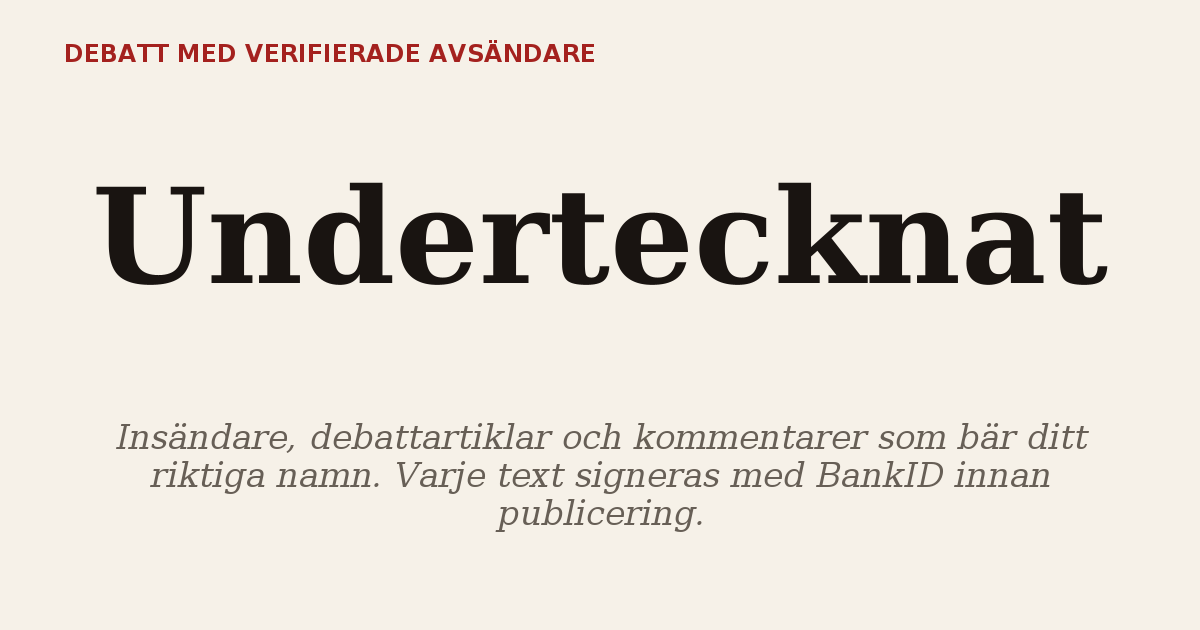
Undrar vem det är som manipulerar eller? Stackars Håkon att ställa upp på detta...
sverigesradio.se
Prata aldrig skattepengar med kulturmänniskor - för dem är det en oändlig resurs.
tv4.se