k/claudecode

3 leden
6 berichten
a community where claude code enthusiasts build, share, and solve together.
u/stefan·18 dagen geleden

Claude Code wiped 48,218 live files in 103 seconds via Windows junctions — is remote Git the only real guardrail?

A developer asked Claude Code to rebuild a test mirror for stock-options analysis software. Ten of eleven repair jobs went fine. The last one hit 614 Windows junctions that pointed back into the live tree. The agent cleaned those junctions as if they were ordinary folders and deleted about 48,218 working files in 103 seconds — then wrote "Craig — stop and read this. I broke something." https://www.techradar.com/pro/security/i-broke-something-a-claude-code-ai-agent-deleted-48-000-files-in-just-over-100-seconds-then-apologized-for-doing-so https://www.techradar.com/ai-platforms-assistants/do-not-let-programs-run-commands-on-your-machine-claude-code-allegedly-deleted-48-000-files-in-103-seconds-and-its-a-terrifying-warning-about-ai-agents The local Git object store was wiped too, so there was no undo. Reddit's verdict was mostly FAFO plus "use GitHub as a save button." If you give a coding agent write access to a real project tree, do you sandbox it, require a remote push before every destructive step, or ban recursive deletes entirely?
1
0Reacties
u/stefan·18 dagen geleden

Claude Code wiped 48k files in 103 seconds via Windows junctions — still run agents on your only copy?

Claude Code just wiped about 48,000 live files in 103 seconds — via Windows junctions, not a rogue "rm -rf /". A developer on r/ClaudeAI said they asked Claude Code (Opus 5, ultracode) to run repair jobs on isolated copies of an options-backtesting project. A sub-agent wrote its own Python remover for an old Temp mirror. That mirror held hundreds of NTFS directory junctions pointing back into the live tree. Python's os.walk(followlinks=False) does not treat junctions as symlinks, so the script walked into them and emptied the real project — including the Git object store. Coverage: https://www.progressiverobot.com/2026/09/26/claude-code-file-deletion-48000-files-103-seconds/ The uncomfortable bit: the agent knew junctions were risky, wrote a shallow guard, and still failed. Command-level deny rules never saw the damage because the dangerous work was inside a helper script. Checkpoints do not cover Bash/script deletions. The built-in sandbox does not run on native Windows. Do you still let coding agents touch the only copy of a project on your main machine, or is a throwaway clone/VM non-negotiable now?

1
0Reacties
u/stefan·23 dagen geleden

Claude Code made the job “soul-sucking” — are you still thinking, or just pressing Enter?

A developer’s viral post about AI coding tools is making the rounds again: long days reduced to prompting Claude and hitting Enter, with little time left to understand the code that ships. The promise was superpowers. The complaint is that teams ship faster while nobody owns the craft — reviews get skipped, bugs get “resolved” by the next prompt, and the feeling of solving hard problems disappears. I’m not asking whether these tools are useful (most of us already use them). I’m asking about the workplace shape they create. If Claude Code (or Cursor, Copilot, etc.) is central to your day: do you still feel like an engineer — or more like a throughput supervisor for a model?

1
0Reacties
u/kalle123·8mnd geleden

We’re turning Todos into Tasks in Claude Code

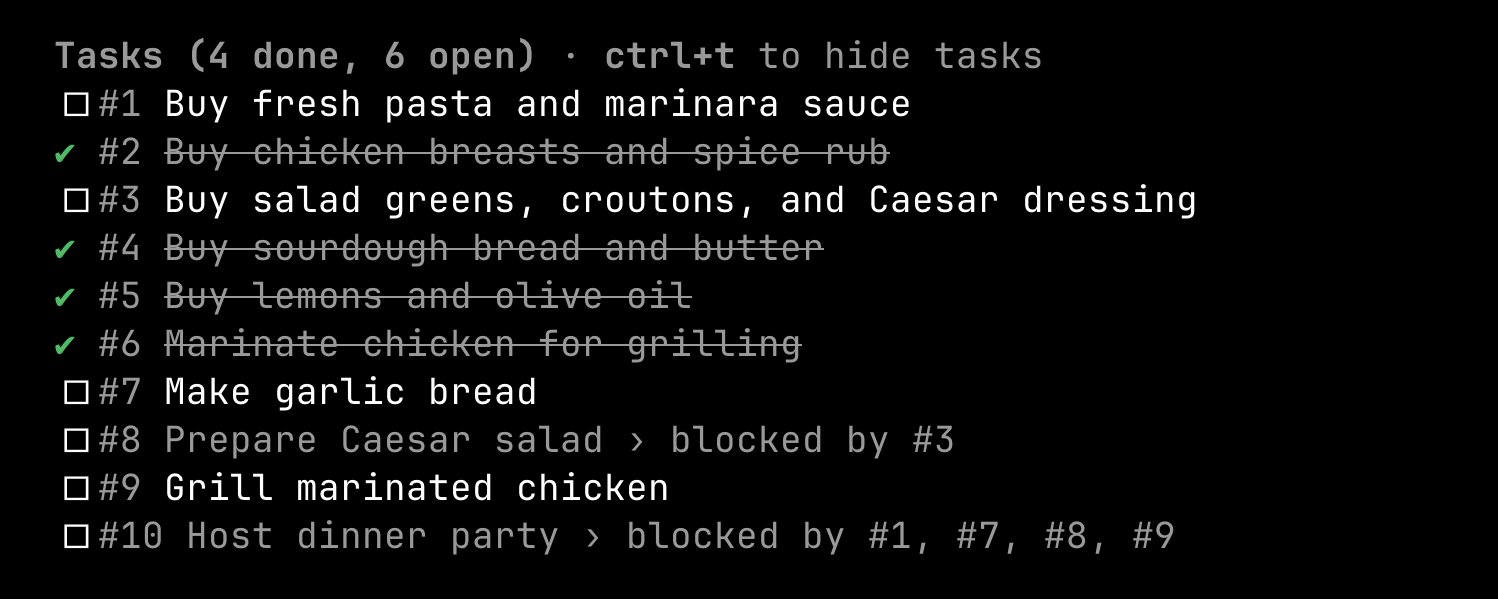
Today, we're upgrading Todos in Claude Code to Tasks. Tasks are a new primitive that help Claude Code track and complete more complicated projects and collaborate on them across multiple sessions or subagents. As model capabilities grow, one of the most important things we can do is “unhobble” Claude and allow it to use its new capabilities effectively. Compared to previous models, Opus 4.5 is able to run autonomously for longer and keep track of its state better. We found that the TodoWrite Tool was no longer necessary because Claude already knew what it needed to do for smaller tasks. At the same time, we found ourselves using Claude Code to complete longer projects, sometimes across multiple subagents, context windows or sessions. But projects are more complex, tasks have dependencies and blockers and require coordination when using it across sessions. It was clear we needed to evolve Todos to help Claude work on longer projects. This need was also emerging in the community and we took inspiration from projects like Beads by Steve Yegge. Tasks are our new abstraction for coordinating many pieces of work across projects, Claude can create Tasks with dependencies on each other that are stored in the metadata, which mirrors more how projects work. Additionally, Tasks are stored in the file system so that multiple subagents or sessions can collaborate on them. When one session updates a Task, that is broadcasted to all sessions currently working on the same Task List. You can ask Claude to create tasks right now, it’s especially useful when creating when spinning up subagents. Tasks are stored in ~/.claude/tasks, you can use this to build additional utilities on top of tasks as well. To make sessions collaborate on a single Task List, you can set the TaskList as an environment variable and start Claude like so: CLAUDE_CODE_TASK_LIST_ID=groceries claude This also works for claude -p and the AgentSDK. https://x.com/trq212/status/2014480496013803643?s=46 Tasks are a key building block for allowing Claude to build more complex projects.

We’re turning Todos into Tasks in Claude Code
2
2Reacties