1

k/angular
2 członków
18 postów
Angular tips, tricks and community. - Moderators Needed!

1
2
Ng-News 26/03: Angular 21.1
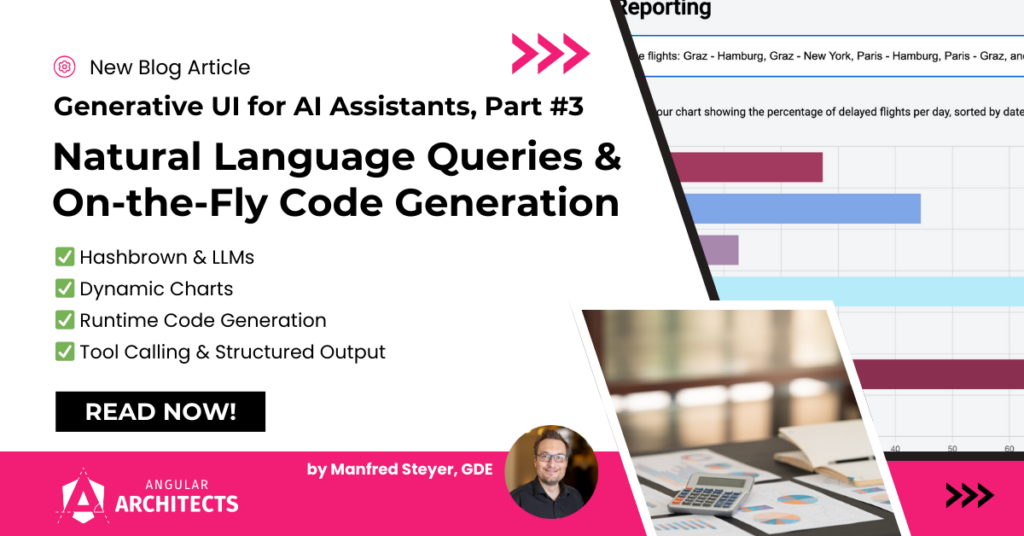
Angular 21.1 is out and, as expected, it’s a smaller release — but there are still some useful changes worth knowing about. This episode covers Signal Forms updates, experimental router auto-cleanup, and new template syntax capabilities, plus where to look next. Key Topics ✅ Signal Forms changes (Field → FormField) 🧭 Router auto-cleanup for route-provided services (experimental) 🧩 Template syntax extensions (@case groups, spread/rest) 🧪 Miscellaneous router and image-loading updates 📅 Release schedule notes and roadmap pointers

2
Great new Article by Manfred Steyer about signal forms.
Have you started using signal forms already?
angulararchitects.io
1

2
NgRx OpenAPI Generator
I recently stumbled upon ngrx-openapi-gen and it looks really promising. Generating NgRx Signal Stores straight from OpenAPI is exactly the kind of DX improvement I like. I’m planning to use it with Spring Boot, and after digging a bit, it seems the intended setup looks roughly like this — with one important caveat. The important part: tags and operationId are not optional If your OpenAPI spec is generated from Spring Boot (via springdoc-openapi), the quality of what you get from ngrx-openapi-gen depends heavily on two things: OpenAPI tags Explicit operationIds These two essentially define your frontend architecture. How ngrx-openapi-gen interprets your OpenAPI spec ngrx-openapi-gen does not invent structure. It derives it. Tags → domains / Signal Stores operationId → store methods & mutations So if you rely on auto-generated values, you’ll get: unstable method names oddly grouped stores APIs that change when you refactor backend code Spring Boot setup that works well 1️⃣ Use @Tag to define domains @Tag(name = "Task") @RestController @RequestMapping("/api/tasks") class TaskController { ... } This tells the generator: “All of these endpoints belong to the same domain/store.” Best practice One main tag per controller Use domain names, not technical ones 2️⃣ Always define operationId @Operation(operationId = "createTask") @PostMapping TaskDto createTask(@RequestBody CreateTaskDto body) { ... } Why this matters: Auto-generated IDs are not stable Method names can change between builds Your frontend API becomes brittle With explicit IDs, you get predictable, readable store methods. Complete example import io.swagger.v3.oas.annotations.tags.Tag; import io.swagger.v3.oas.annotations.Operation; @RestController @RequestMapping("/api/tasks") @Tag(name = "Task") class TaskController { @GetMapping @Operation(operationId = "getTasks") List<TaskDto> getTasks() { ... } @PostMapping @Operation(operationId = "createTask") TaskDto createTask(@RequestBody CreateTaskDto body) { ... } } What this generates in Angular Typically something like: taskStore.getTasks(); taskStore.createTask({ title: 'New task' }); Which is exactly what you want when consuming a store. TL;DR If you want ngrx-openapi-gen to feel “clean” with Spring Boot: Treat OpenAPI as a frontend contract Use @Tag intentionally Never rely on auto-generated operationIds Do that, and this generator becomes a very nice bridge between Spring Boot and Angular. If anyone here is already using this in production with Spring Boot, I’d love to hear how you’re structuring larger APIs (multiple versions, shared domains, etc.).
coderabbit-gmbh.github.io
3
NgRx Toolkit v21 released
The NgRx Toolkit originates as far back as when the SignalStore was not even marked stable. As the package was in its early stages, community requests for various functionality poured in.
dev.to
1
What's NEW in Angular 21? (Top picks)
In the video, Asham goes through the latest changes in Angular, showing some differences (practically) in Signals vs Zones, AI in Angular, linkedSignal & Resources, and Angular Aria. Code repo: https://github.com/AhsanAyaz/angular21-whats-new
youtube.com
1

1
TIL: ngx-dev-toolbar — toggle feature flags, permissions & user tiers directly inside your Angular app
Just came across ngx-dev-toolbar and it solves a very familiar Angular dev problem. How often do you: tweak user roles or permissions directly in the database log in as different users to test RBAC jump to LaunchDarkly or some admin UI just to flip a flag This tool adds a dev-only toolbar directly inside your Angular app (inspired by Astro / Next.js dev toolbars). What it lets you do locally: Toggle feature flags without touching backend or flag providers Simulate permissions / RBAC without switching accounts Test different subscription tiers (Basic / Pro / Enterprise) Save everything as presets (e.g. “Trial user”, “Admin full access”) The toolbar: toggles with Ctrl + Shift + D stays hidden unless you need it is not bundled in production → zero prod impact Nice bonus: you can build custom dev tools (e.g. one-click test data creation, dev-only actions). Setup is minimal (install + drop <ndt-toolbar /> into your root component). Feels like a solid way to: keep dev flow avoid database gymnastics stop affecting shared environments GitHub: https://github.com/ngx-dev-toolbar/ngx-dev-toolbar Curious if anyone here has tried this in larger Angular apps? How do you usually handle feature flags and permissions in dev?
medium.com 1
Conferences
🎟️ 2026 Conference Planning — Angular Dev (but also curious about the bigger tech world)
Hej devs! 👋 As someone deep in Angular all day, I’m starting to sketch out my conference roadmap for 2026 and thought it could be fun (and useful) to compare notes here. I’m not only looking at Angular-specific conferences — I also want to dip into other tech worlds (React, broader JS ecosystem, frontend/infra, AI/dev tooling, backend) to see what ideas, patterns, and tooling we might borrow or get inspired by. So far I’ve booked KotlinConf 👉 https://kotlinconf.com/ — always awesome and great for stepping outside the pure frontend bubble. What are you planning to attend in 2026? Angular-focused or not — curious to see what conferences you find valuable and why.
1
Roberto Heckers on NgOptimizedImage
Stop shipping multiple images for size optimization and use hashtag#Angular NgOptimizedImage directive and a CDN loader to handle this for you 📸📦
linkedin.com
1

1
Do you generate services and dtos?
People using angular - do you generate service code from an openapi-spec? If not why? We have seen a huge productivity boost when we made backend the "master" and only allowed generated services/model classes. Added some new params to a model class i backend - generate and boom - available in the frontend.
1

1
1
1